
Call Us At (941) 207-7477
The most common cause that results in car accidents is driver error; however, defective parts can be the cause also. You may file a claim in case your automobile or the car of another motorist has an inferior part.
Guidelines for automobile makers and producers
Automobile manufacturers are responsible for making safe products. In 1978, The National Highway Traffic Safety Administration NHTSA was established. It began testing vehicles and rating them for protection and frontal impact in 1970. In 2016, they added the following tests to its repertoire:
- Side crash protection
- Rollover resistance
The NHTSA also began asking manufacturers to adopt some safety devices such as collision avoidance technology, rearview cameras, or other emergency braking abilities. The windows of all the new cars require a 5-star rating from the NHTSA.
These standards assist consumers in making informed decisions about the vehicles they are purchasing. They also hold automakers accountable to a higher level. Automakers are required to make products that meet these guidelines by requiring window labels.
Unfortunately, even though products and vehicles are put through a series of tests, nothing is guaranteed to happen. There can be defective parts from either the vehicle manufacturer or a third-party manufacturer.
The Manufacturer’s Responsibility
Like when you drive your car, manufacturers have a responsibility to keep the driver safe. They have a responsibility to make products that are safe and will not cause accidents with normal usage. If they discover a defect they are also responsible for issuing the recall.
Common types of defective parts
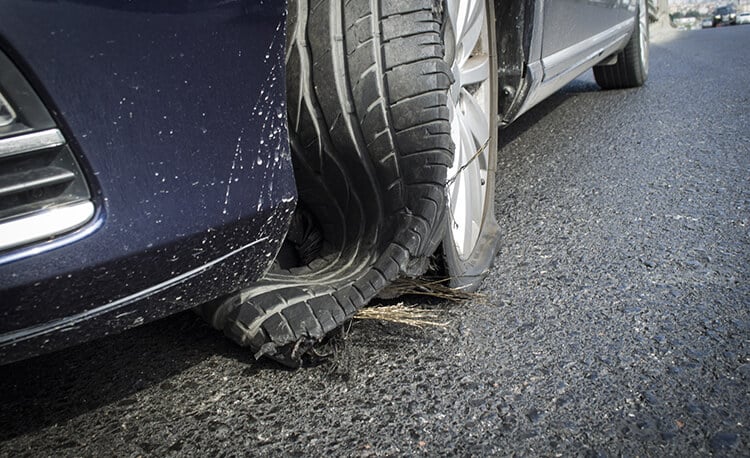
Every component of the vehicle serves a vital role in ensuring that the vehicle works as expected and safely for both the driver and other users of the road. In the case of failure of a car component, injury occurs to the user or even to other drivers or vulnerable users. The most common types involve the defective part being cited as the cause of a lawsuit.
Brakes
Your car’s braking system is bad and can thus pose a significant risk to your safety and other road users’ safety. You won’t stop safely without good brakes. You could lose control or even crash your vehicle if your brakes fail at high speeds.
According to NHTSA, defective brakes are responsible for 22 percent of accidents that result from vehicle failure. There are several types of brake defects.
- Missing components
- Cracks on the brake disc
- Installation is done incorrectly
Steering
It can be terrifying to not be able to control your car. It’s easy to lose control when the steering wheel stops working. Steering wheel problems include:
- Jammed wheel locks
- Pumps can malfunction.
- Leaking fluids
Call Us At (941) 207-7477
Airbags
Airbags that are defective can lead to two potentially dangerous situations. They can explode or deploy prematurely. Airbags that deploy prematurely can do more harm than good. They can obscure vision and cause unnecessary injuries.
Airbags may explode and eject shrapnel which may cause severe injury to the driver or passenger. This will worsen an accident. It is important to replace your airbags if you notice that they have been recalled.
Fuel Tanks
The fuel tanks can be placed in a way that makes it more likely for an explosion or fire to happen as a result of a fuel leak. Another defect is improper or poor welds that can cause a rupture in the tank.
Who is responsible for a defective part?
In most instances, the producer is responsible for the faulty component and the destruction it causes. However, there are some exceptions where other parties may be liable. For example, if you bought a car with an issue in its maintenance (but the dealer failed to document this), then they may be liable.
A mechanic can be held liable in case they do not repair your car correctly or cause damage to it or any part of it.
Sometimes, the defective part is only partially responsible. In many cases, human negligence still plays a part. In most instances, the producer is responsible for the faulty component and the destruction it causes.
How to Get Compensation for an Injury Because of Defective Parts
Compensatory damages through a lawsuit can be claimed against the manufacturer or any other liable party. Some damages you may be able to recover include:
- Medical Bills
- Lost Wages
- Loss of earning capacity
- Loss of Consortium
- Pain and suffering
- Mental anguish
- Scarring and permanent disfigurement
- Funeral and burial costs (in cases of wrongful death)
You will be paid compensation according to the degree of injury and extent of your damage.
Depending on who or which party is liable for your injuries, you may have a claim against several defendants. If in the earlier example, the airbag and a defect in a driver caused an accident, that is the one filing the suit against both. In case of a defective product as the cause of the accident, you will be filing your suit against the manufacturer.
If You or a Loved One Has Been an Accident Victim of a Defective Part, Call W. Lee Clark & Associates Today!
Schedule your free online case evaluation or contact us at (941) 207-7477. For more information about W. Lee Clark & Associates schedule a case evaluation for free online or by calling.